

Let’s Talk About Guava
Fiber, vitamin C, and why this is one of the most metabolically supportive fruits

Fiber, micronutrients, and antioxidants don’t work in isolation. They work as systems.
Guava is one of those examples where these systems align: soluble and insoluble fiber that influence glucose absorption, vitamin C that supports tissue repair and iron utilisation, and phytochemicals that buffer oxidative stress.
This edition explores why.
How nutritionally dense is guava?
Guava’s value is not in novelty or sweetness, but in nutrient density relative to energy load. Per 100 g of raw fruit, guava provides roughly:
~68 kcal
~5 g total dietary fiber
Vitamin C in amounts that often exceed 100% of daily requirements
Potassium, folate, vitamin A precursors (carotenoids), and a wide spectrum of polyphenols
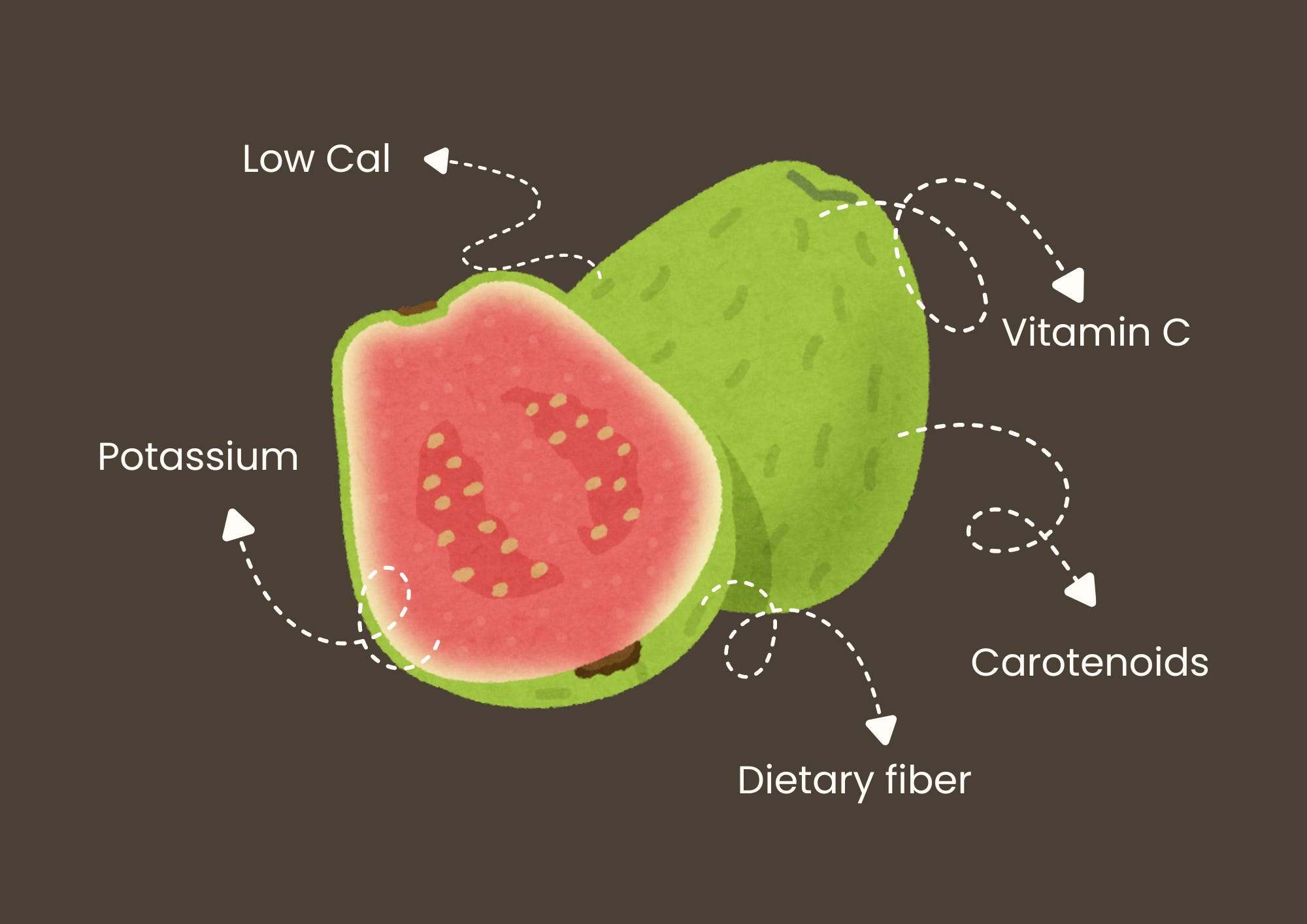
From a metabolic perspective, this matters because guava provides a high return on nutrients without placing a heavy demand on blood sugar. Its calorie-to-nutrient ratio is favourable, and its fiber-to-carbohydrate ratio is higher than that of most commonly eaten fruits.
These nutrients are not passive. They actively support recovery, energy regulation, and ongoing tissue maintenance.
Vitamin C
Take vitamin C as an example. In guava, vitamin C intake often crosses daily requirements in a single serving. This has implications beyond immune defence:
Vitamin C enhances non‑heme iron absorption by reducing ferric to ferrous iron, a clinically relevant mechanism in individuals with low or borderline ferritin
It is required for collagen synthesis, influencing skin integrity, connective tissue, and gut barrier health
It functions as a key antioxidant co‑factor, neutralising reactive oxygen species and regenerating other antioxidants within the system
Unlike fat‑soluble vitamins, vitamin C is not stored extensively. Consistent dietary intake through whole foods like guava supports steady availability for these functions.
Potassium
Potassium helps maintain fluid balance in cells and supports healthy blood pressure and muscle function. Folate is involved in red blood cell formation and key metabolic processes, while carotenoids and other plant compounds add antioxidant and anti-inflammatory support.
What makes guava especially effective is that these nutrients come together in a fibrous whole fruit. The fiber slows digestion and helps the body use these nutrients more efficiently. This is nutrient density that works with the body, not against it.
Fiber
Guava is one of the more fiber‑dense fruits in routine diets, providing both soluble and insoluble fiber in clinically meaningful amounts.
Soluble fiber slows digestion and sugar absorption, helping prevent sharp blood sugar spikes and crashes after meals. Insoluble fiber adds bulk and supports regular bowel movements, keeping digestion moving efficiently.
This matters because digestion, blood sugar control, and hormones are closely connected. When fiber intake is low or gut movement is slow, it often shows up as fatigue, bloating, unpredictable hunger, and unstable energy.
Guava’s fiber profile helps support:
Feeling full and satisfied after eating
Steadier energy after meals
A gut environment that supports beneficial bacteria
This isn’t harsh or overwhelming fiber. It’s functional fiber, supportive without being disruptive.
Glucose handling and metabolic stability
Even though guava tastes sweet, it doesn’t disrupt metabolism when eaten whole.
Its fiber slows how quickly sugars are absorbed, so it has a gentler effect on blood sugar than many low-fiber fruits. This is why guava is often better tolerated by people with insulin resistance, PCOS-related blood sugar issues, or strong hunger soon after eating.
Research on guava leaves also shows effects on insulin sensitivity and carbohydrate metabolism. While this isn’t the same as eating the fruit, it supports the idea that guava contains compounds that help regulate blood sugar.
Antioxidants and oxidative stress buffering
Guava provides more than vitamin C. It contains carotenoids, flavonoids, tannins, and other polyphenols that contribute to its antioxidant capacity.
Oxidative stress is not a hypothetical concept. It affects how insulin works, increases inflammation, and speeds up tissue strain, especially with chronic stress, poor sleep, or intense training.
When eaten regularly, guava helps reduce this background stress. Much of this benefit comes from the peel, which is why eating the whole fruit matters.
Cardiometabolic implications
Guava’s nutrient composition supports heart health through multiple overlapping mechanisms:
Fiber contributes to improved lipid handling over time
Potassium supports vascular tone and blood pressure regulation
Antioxidants reduce oxidative modification of lipoproteins
In controlled dietary contexts, guava intake has been associated with improvements in blood pressure and lipid profiles, likely due to the combined effects of fiber, potassium, and antioxidant compounds rather than any single nutrient.
Who benefits most from including guava
Guava is particularly useful for individuals who:
Struggle to meet daily fiber requirements
Experience weak digestion or irregular bowel movements
Have iron deficiency or borderline ferritin levels
Need steadier blood sugar after meals
Want nutrient density without excessive caloric load
It is also a practical fruit for those anxious about fruit intake due to blood sugar concerns, provided it is eaten whole and in appropriate portions.
Common mistakes that blunt its benefits
Juicing guava, which removes the fiber matrix and alters glycemic response
Peeling it completely, discarding a significant portion of polyphenols
Seeds aren’t “bad” they contain a lot of the beneficial fiber
How to Enjoy Guava the Right Way
As a mid‑morning or afternoon fruit
After meals to support digestion and micronutrient intake
Chopped into savoury salads for fiber diversity
Lightly stewed for individuals with sensitive digestion
TL;DR
Guava is high-fiber, vitamin-C rich, and metabolically well-behaved.
It supports digestion, steadier blood sugar, and micronutrient intake without stressing glucose metabolism, especially when eaten whole, with the peel.
Simple fruit. Serious physiology.
What’s one fruit you’d like broken down like this next?
See you next Saturday!
Ishita
🌐nourivabyishita.com
My hometown is famous for red guava...so yes..it is integral part of my diet life 💛
Who said an apple a day keeps the doctor away?
I say a guava a day keeps the doctor away.
I prefer eating guava . Your article*GAVE-A* good insight into its constituents and uses.
Thanks.