

Constipation: Why Your Gut Is Giving Silent Treatment
Hydration, timing, steps, fibre… the group project where every member matters.

Your gut isn’t ignoring you.
It’s just underpaid, overworked, and running on havoc.
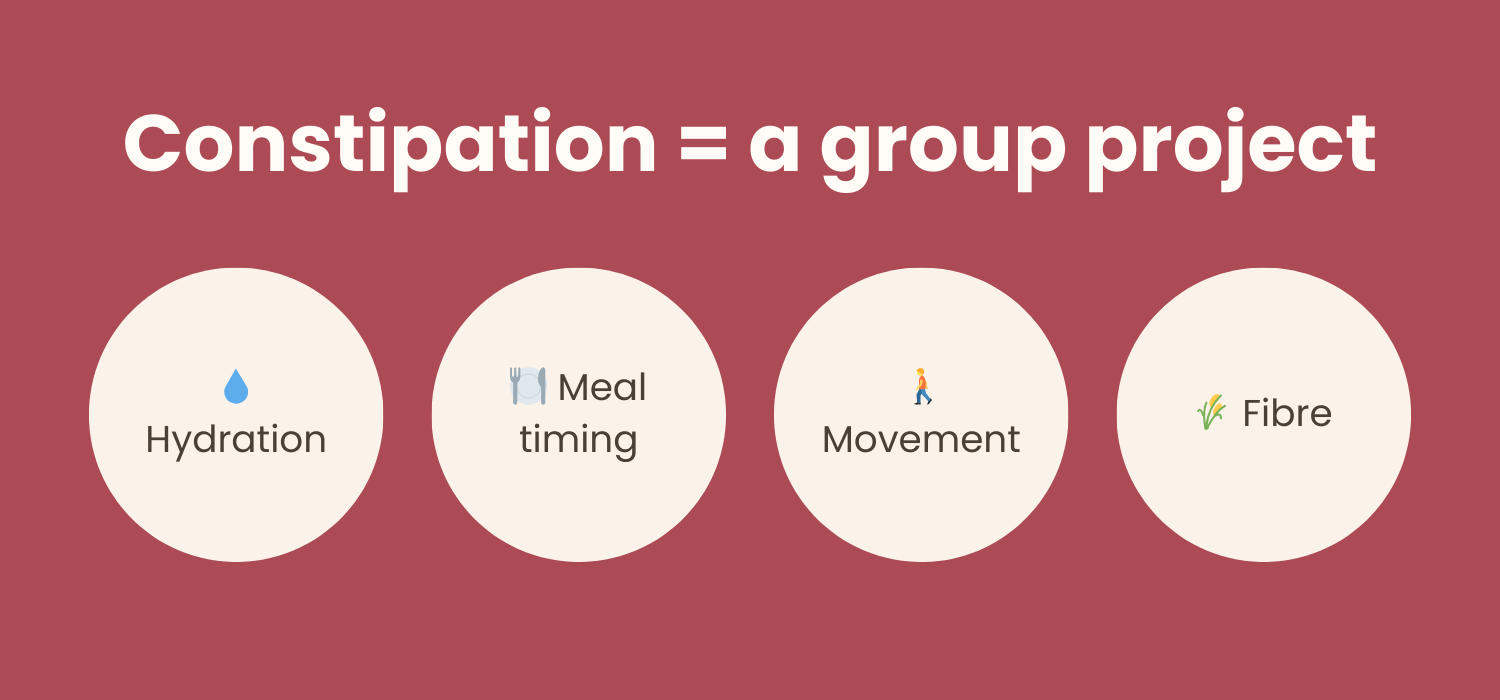
Constipation is a rhythm disorder, a mismatch between what your gut expects and how your daily habits behave. Hydration arrives late, meals are ghosting, fibre is hyperactive, and movement is on a sabbatical.
Let’s fix that.
Hydration: Your Colon Is Not a Cactus
90% of people think constipation = “just drink more water.”
Cute. But also wrong.
Your colon doesn’t need more water; it needs water at the right times.
Why hydration rhythm is important:
The colon’s job is to reabsorb water from stools. When your overall hydration is low, it reabsorbs extra, making stools hard and dry.
Studies show that even mild dehydration increases colonic transit time, meaning everything slows down.
Your gut responds best when water intake is steady and front-loaded, not dumped into the system at 8 PM out of guilt.
What works:
Start your day with 300-400 ml water. Morning hydration supports the gastrocolic reflex → easier morning bowel movements.
Distribute water across the day. Sip, don’t flood.
Electrolyte balance matters. Sodium + potassium help maintain proper fluid shifts into the colon.
If you exercise or sweat heavily, add a pinch of salt to one or two glasses of water or include mineral-rich foods across the day. This helps fluids stay in your system instead of just passing through.
What doesn’t work:
Gallon-chugging at bedtime. The colon does not appreciate dramatic gestures.
Your gut wants commitment, not confusion.Meal Timing: Your Gut Has a Circadian Clock Too
Your digestive tract runs on timed electrical waves (migrating motor complex).
These waves sweep your gut clean every 90–120 minutes between meals.
Late-night eating cancels these waves → stagnation → constipation.
How timing affects gut movement:
Predictable meals strengthen the gastrocolic reflex, the automatic urge to poop after eating.
Irregular meals blunt this reflex, especially in individuals already prone to slow transit.
Night meals are digested 30-40% slower because the gut’s circadian rhythm winds down.
What works:
Keep breakfast & lunch within a 60–90 min window daily.
Have your last meal 2.5–3 hrs before bed.
Eat enough at breakfast (it is the strongest trigger for the morning bathroom signal).
What doesn’t work:
Fasting till noon “because I wasn’t hungry.”
Your colon was waiting for that trigger.
Movement: Steps Are Literally Colon Stimulants
Movement is not optional.
Studies show even light walking increases colonic motility by stimulating the enteric nervous system, your gut’s own brain.
Why steps matter:
Walking increases peristaltic waves that push stool forward.
Movement increases blood flow to the gut = faster transit.
Post-meal walks specifically reduce upper GI stasis, helping the lower GI move better.
What works:
5-10 minutes of walking after every meal.
Morning sunlight + steps → synchronizes circadian rhythm, improves cortisol curve → better morning motility.
Break sitting every 45-60 min.
Fibre Balance: Too Much Is Also a Crime
Everyone thinks constipation = “increase fibre.”
Reality: Fibre without water and movement = traffic jam.
Let’s be nerdy for 10 seconds:
There are two types of fibre:
Soluble (soothes + forms gel) → oats, chia, fruits, psyllium
Insoluble (bulks + speeds transit) → whole grains, veggies, bran
Most people add tons of insoluble fibre → stool becomes bulky but dry → colon stops cooperating.What works:
Aim for 25-30 g fibre/day, but keep a 60:40 ratio of soluble to insoluble if constipated.
Add fibre gradually (5 g every few days), abrupt increases cause bloat.
Match fibre with hydration or you’ll create a brick.
Psyllium is still elite, research shows it improves both stool form & frequency better than wheat bran.
What doesn’t work:
Rolling chapatis thinner so they count as “more fibre.”
Adding a salad mountain with zero water intake.
Other Underrated Constipation Triggers People Ignore
Electrolyte imbalances
Low magnesium? Low potassium? Both can reduce smooth muscle contraction in the colon.
Caffeine timing
Coffee can stimulate motility only when your body isn’t chronically stressed, underfed, or dehydrated.
Otherwise it’s just anxiety juice.
Stress + gut-brain axis
High cortisol slows digestion + delays colonic transit.
No wonder people are constipated during exams, deadlines, and life.
Sleep
Short sleep or late sleep disrupts gut motility the next morning by altering the colon’s circadian clock.
Ignoring the urge
Delaying the bathroom signal weakens the anorectal reflex.
Your body literally stops sending the message.
Constipation Isn’t Random. It’s a Rhythm Issue.
If hydration is inconsistent, meal timing is unpredictable, movement is occasional, and fibre is unbalanced…
your gut goes on silent mode.
Fix the rhythms → fix the motility.
Small habits → big bathroom wins.
Call it out: timing, fibre, water, or movement?
See you next Saturday!
Ishita
🌐nourivabyishita.com
I really appreciate this article, so thank you. But I have a few questions that I have been struggling with. Perhaps you could help me out ( in your own time).
1. I have a fairly severe chronic condition that does mean chronic electrolyte and mineral deficiencies. I take supplements and have dietary adjustments to help with that, but my body struggles to absorb nutrients. In addition to this, I also have SIBO, which relapses from time to time. I therefore try to follow a SIBO friendly diet. This really restricts carbohydrates and therefore the fibre.
How can one increase fibre without also increasing carbs?
I read that I should stay around 23% of carbs a day, but at that amount my fibre intake barely reaches 12 grams. I really struggle in knowing what to focus on - or how to find the best solution.
I also find a big correlation between my cycle and constipation. I start experiencing constipation at ovulation and continues until the cycle resets. Almost nothing helps during those weeks. I am on hormonal treatment, but it hasn’t quite stabilized as my body seems to have a hard time absorbing those too.
Thank you